For decades, many home bars treated vermouth as an afterthought—a dusty bottle sitting forgotten on an ambient shelf, pulled out solely to moisten a martini glass. Today, a global renaissance has brought this historic European aperitif back to center stage. Whether sipped over ice before dinner or mixed into legendary drinks, this aromatic staple brings exceptional depth and herbal nuance to any glass.
What Is Vermouth? Understanding Fortified & Aromatized Wine
At its core, vermouth is a specialized category of fortified wine that has been infused with botanicals—roots, barks, flowers, seeds, herbs, and citrus peels. The name itself traces back to the German word Wermut, meaning wormwood, the historical bittering herb that defines traditional recipes.
To make it, producers start with a neutral grape base (comprising at least 75% of the total volume). They fortify it with distilled spirits like brandy or neutral grain alcohol to raise the alcohol by volume (ABV) to around 15%–18%, then steep it with proprietary botanical blends.
Understanding the difference between sweet vermouth vs dry vermouth helps you navigate bar menus and cocktail specs with confidence:
-
Sweet Vermouth (Rosso/Rojo): Originating in Italy, sweet red styles are caramel-hued, rich, and spiced with vanilla, cinnamon, and dark fruit profiles. Despite the color, red styles are usually produced from white wine bases and tinted with caramelized sugar.
-
Dry Vermouth: Famously crafted in France, this clear or pale straw-colored variety is herbal, crisp, floral, and distinctly tart.
-
Bianco / Blanc: A French and Italian hybrid style that features the sweetness of a red vermouth alongside the floral, zesty citrus freshness of a pale wine base.
How to Drink Vermouth: Temperature, Glassware, and Garnish
Learning how to drink vermouth begins with treating it as what it truly is: wine. Because it retains fresh grape characteristics, it requires proper handling to shine.
-
Serve It Cold: Always chill your bottle before pouring. Optimal serving temperature lands between 8°C and 12°C.
-
On the Rocks: In Spain and Italy, the gold standard is pouring 60–90 ml over a tumbler of solid ice cubes. A twist of orange peel complements sweet red styles, while an olive or lemon wheel lifts dry and blanc varieties.
-
With Soda (Vermut con sifón): Lengthen your pour with cold soda water or quality tonic for a low-ABV highball that refreshes on warm afternoons.
-
Storage Rules: Because it is a fortified wine rather than a distilled spirit, it oxidizes over time. Once opened, seal the bottle tightly and store it in your refrigerator. Use it within 4 to 6 weeks for optimal aroma and flavor.
5 Easy Vermouth Cocktails You Can Make at Home
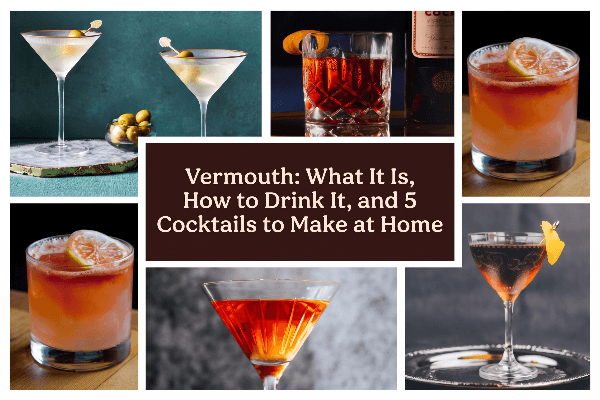
You do not need professional bar tools or complicated infusions to craft classic drinks. These straightforward vermouth cocktail recipes highlight just how versatile the bottle can be when assembling easy home cocktails.
1. Negroni
The quintessential bittersweet Italian aperitif. Stir equal parts London dry gin, Campari, and sweet red vermouth over ice in a rocks glass, then express a fresh orange peel over the rim.
2. Classic Dry Martini
A clean, elegant showcase for dry herbal styles. Stir a generous measure of crisp gin or vodka with a splash of dry vermouth over plenty of ice, strain into a chilled coupe, and garnish with a lemon peel or green olive.
3. Manhattan
Warm, spiced, and spirit-forward. Combine American rye whiskey or bourbon with half as much sweet red vermouth and two dashes of aromatic bitters. Stir smooth, strain into a stemmed glass, and drop in a brandied cherry.
4. Americano
The lighter precursor to the Negroni, created for daytime sipping. Mix equal measures of Campari and sweet red vermouth over ice in a tall glass, top with chilled sparkling water, and stir gently with an orange slice.
5. Bamboo
A sophisticated, low-alcohol cocktail born in 19th-century Yokohama. Stir equal parts dry sherry and dry vermouth with a dash of orange bitters over ice, then strain into a cocktail glass with a lemon twist.
Frequently Asked Questions
What is the difference between dry and sweet vermouth?
When comparing sweet vermouth vs dry vermouth, the primary differences lie in residual sugar, botanical profiles, and regional origin. Sweet varieties contain around 130–150 grams of sugar per liter, showcasing rich vanilla, dark caramel, and warming spice notes. Dry varieties contain under 50 grams of sugar per liter, featuring crisp acidity, chamomile, gentian root, and citrus peel.
How long does an opened bottle of vermouth last?
Because it contains grape wine, an opened bottle begins to oxidize immediately. If left at room temperature, it loses its vibrancy within days. Stored inside the refrigerator with the cap secured, it retains peak aromatics for about a month, remaining drinkable in cocktails for up to eight weeks.
Should vermouth be served as an aperitif or a digestif?
Traditionally, vermouth is best served as an aperitif. Its bitter botanicals and natural acidity stimulate salivary glands and digestive enzymes, prepping your palate for the meal ahead. Richer, bitter-heavy styles (like Vermouth di Torino or Punt e Mes) can also serve as relaxing digestifs over ice after dinner.